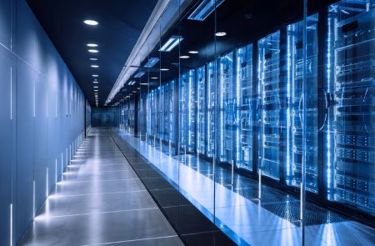
Data centers have been a staple of modern society for decades, and in the age of AI, they are becoming both more common and more critical. In these facilities, continuous operation is a nonnegotiable mandate that requires a substantial amount of water to keep the required equipment cool during operation. The key challenge is managing this volume of water while preventing particulate contamination that would lead to catastrophic system failure.
To that end, many data centers use membrane or reverse osmosis (RO) technology to keep their water as clean as possible. However, this equipment is expensive to run and the media costly to replace. As such, high-quality mechanical side stream filtration is a must. Advanced mechanical filtration is essential for removing large particulate matter before the water reaches this highly sensitive downstream equipment. With effective side stream filtration, data centers can save thousands of dollars each year, reduce water consumption, and ensure uninterrupted operation.
Avoiding Catastrophe
The consequences of poor filtration in data center cooling can be severe. Most membranes and RO systems would quickly become clogged, thereby increasing differential pressure. In the best-case scenario, the membranes must be backwashed, which consumes energy, time, and water; the worst-case scenario is one or more membranes must be replaced, which can cost thousands of dollars per membrane, as well as several hours of downtime.
Moreover, any system failure, even minor ones, can cause catastrophic stoppages. Data centers cannot afford to just stop servicing or sending data across the web. The side stream filtration systems by Harmsco Housings and Cartridges are therefore engineered to prevent damage to semi-permeable membranes within reverse osmosis systems and to remove and protect from larger contaminants not just for purification but also as a critical redundancy measure to protect against downtime.
High-Capacity Cartridge Design
The key to good and effective filtration lies in the cartridge design, which must be specifically engineered to handle the substantial debris loads. System designers need cartridge media with the largest square footage area available. For instance, some cartridges boast 170 sq. ft. of media. This allows the filter to remove more particulates over a longer period of time.
Contaminants can enter the system via cooling water towers that are exposed to the atmosphere. This leads to the accumulation of dust and sediment, scale, corrosion, algae and mold, and more, all of which can clog or foul membranes. As such, side stream filtration systems must be able to handle particulates ranging from 50 microns to 5 microns. It’s not uncommon for data centers to deploy multiple levels of screening (e.g., 50-, 10-, and 5-micron filters), as well as to include 5-micron filters after the membranes as a final polishing step.
Operational And Water Efficiency
Advanced cartridge technology can significantly improve operational efficiency, particularly regarding water and energy use. Ideally, cartridges should not require backwashing, as this significantly increases both uptime and water efficiency –– metrics for which data centers are often scrutinized.
Furthermore, if a data center recycles the majority of its water, then the filtration efficiency rate can increase even more. Beyond water, mechanical filtration cuts a significant amount of energy and effort from the system. While the standard claim for data centers is 20% savings in energy, this percentage can be much greater. Without proper side stream filtration, more frequent preventive maintenance will be required, which brings added expense to the maintenance and system upkeep costs.
The physical configuration of the filtration system should be designed to support the oversized and over redundant nature of the data center. The use of vertical setups, for example, ensures high filtration capacity in a small footprint, a critical advantage over horizontal systems that can be about the length of a tractor trailer. Modularity is also key; if a productivity demand requires increasing the size of the system, the number of filters can be quickly added with simple piping.
Extended Service And Sustainability Through Reusability
Maintenance procedures need to be structured around extending the life of the components, aiding the data center’s broader sustainability goal of minimizing waste. To do this, the cartridges must be able to be quickly and easily removed, as well as durable enough that they can be cleaned and replaced. This avoids having to replace large batches — sometimes hundreds of cartridges in a large setup — immediately after use. While cleaned and replaced filter cartridges may not have the same efficiency as new ones, this reusability still helps to extend the life and service of the system, as well as reduce costs.
In an industry where uptime is everything, advanced side stream filtration is not just a safeguard, it’s a strategic advantage. By protecting sensitive membranes, reducing water and energy waste, and extending component life, high-performance filtration ensures data centers stay efficient, resilient, and ready to meet the unrelenting demands of the digital world.