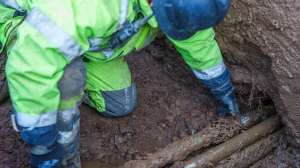
Since studies have shown for years that 80% to 90% of all injuries occur due to unsafe actions, it’s reasonable to believe that these injuries are because many employees are willing to put themselves in the “line of fire,” so to speak. That means an employee has made the choice to ignore a hazard and put themselves at risk of an injury or worse.
Speaking of worse, around 5,000 to 5,300 workers die from traumatic injuries annually in the U.S., with 5,283 fatalities in 2023. When you include deaths from occupational diseases (like exposures to hazards), the total is much higher, around 140,000 workers annually (including 135,000 disease-related), averaging about 15 deaths per day from injuries and many more from illness, according to the AFL-CIO and OSHA.
OSHA lists its Fatal Four “line of fire” causes of death at the workplace as follows:
- Falls – 36.5% of all fatalities
- Electrocution – 8.5% of all fatalities
- Struck by – 8.4% of all fatalities
- Caught in/between – 7.3% of all fatalities
These fatal four also result in nonfatal injuries every day in the workplace.
The main reasons for “line of fire” incidents include complacency, over confidence, distractions and lack of focus, poor housekeeping, taking shortcuts and lack of awareness.
Many of these reasons can lead employees to ignore hazards or potential hazards to their own risk. Often, employees can get so accustomed to working around hazards that they start believing it’s just part of the job. In our industry, there are hazards that can’t be avoided like trenches and confined spaces. But when a recognized hazard that can be eliminated goes unnoticed or gets ignored, employees put themselves in the line of fire and it is just a matter of when an injury occurs.
Examples of common hazards we can avoid in our industry include:
- Entering an unsafe trench
- Working on live circuits without proper training or following procedures
- Climbing on tanks without proper fall protection
- Entering a confined space without taking proper precautions
- Speeding or distracted driving
- Working with chemicals without reading the SDS or labels
- Failing to protect themselves from wastewater splashes
- Working around wells without fall protection
- Working with electrical panels, pumps or motors in wet conditions
- Lifting heavy objects without proper lifting techniques or getting assistance
Working in the line of fire should never be accepted practice. If the risk can be eliminated, let us take the time and use the resources available to eliminate that risk. If the risk cannot be eliminated, let us follow safe work practices to protect ourselves and co-workers. Workplace injuries are never OK and should not be seen as par for the course in our industry.